


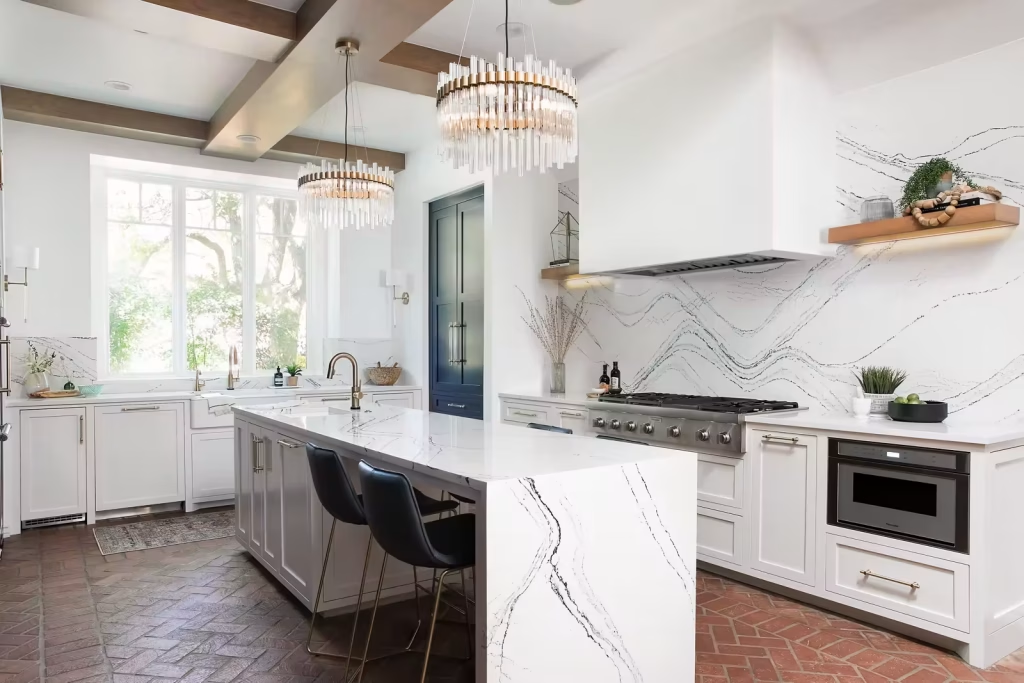
When choosing a material for your countertops, two popular options often come up: Quartz and Quartzite. While their names sound similar, these stones are quite different in terms of composition, appearance, and performance. To help you make an informed decision, we’ve broken down the key differences, along with the pros and cons of each material.
What is Quartz?
Quartz is an engineered stone, meaning it’s man-made from a combination of natural quartz crystals, resins, and pigments. This process results in a highly durable and non-porous surface, making it a popular choice for kitchens and bathrooms.
Pros of Quartz:
– Durability: Quartz is extremely hard and resistant to scratches, chips, and stains, making it ideal for high-traffic areas.
– Non-Porous Surface: The non-porous nature of quartz means it doesn’t require sealing and is highly resistant to bacteria and mold, ensuring a hygienic surface.
– Consistency in Appearance: Quartz countertops offer consistent colors and patterns, which is perfect if you’re looking for a uniform look throughout your space.
– Low Maintenance: Since it doesn’t need to be sealed, quartz is easy to maintain with just regular cleaning using mild soap and water.
– Variety of Designs: Available in a wide range of colors and patterns, including some that mimic the look of natural stone like marble or granite.
Cons of Quartz:
– Heat Sensitivity: Quartz is not as heat-resistant as some natural stones, so it’s advisable to use trivets or hot pads to avoid damage.
– Less Natural Look: While quartz can mimic natural stone, it doesn’t have the same natural veining and texture, which might be a downside for those seeking an authentic stone look.
– Cost: High-quality quartz can be expensive, sometimes comparable to or more expensive than natural stone options.
What is Quartzite?
Quartzite is a natural metamorphic rock that forms when quartz-rich sandstone is subjected to high heat and pressure. This process transforms the stone into a durable, dense material with a crystalline appearance, often featuring dramatic veining.
Pros of Quartzite:
– Natural Beauty: Quartzite offers stunning natural patterns and colors, often resembling marble with its beautiful veining but with the hardness of granite.
– Durability: Quartzite is harder and more resistant to scratching and etching than many other natural stones, making it an excellent choice for countertops.
– Heat Resistance: Quartzite is highly heat-resistant, making it a great option for kitchens where hot pots and pans are frequently used.
– Unique Look: Each quartzite slab is unique, offering one-of-a-kind beauty that adds a luxurious touch to any space.
Cons of Quartzite:
– Porosity: Unlike quartz, quartzite is porous and requires regular sealing to prevent staining and maintain its appearance.
– Maintenance: Quartzite needs more maintenance than quartz, including periodic sealing and careful cleaning with non-abrasive products.
– Higher Cost: Quartzite is typically more expensive than quartz, especially the rarer and more exotic varieties.
– Limited Color Options: While quartzite is beautiful, it doesn’t come in as many colors as quartz, limiting choices for those seeking specific hues.
Both quartz and quartzite are excellent choices for countertops, each with its own set of advantages. At SoCal Stone Fabricators, we understand that selecting the right material can be overwhelming. That’s why our team of experts is here to guide you through the process, helping you find the perfect countertop that fits your lifestyle and aesthetic.
If you’re considering quartz or quartzite for your next project, visit our showroom or contact us to learn more about these beautiful materials and how they can enhance your home.

